
Table of
Contents

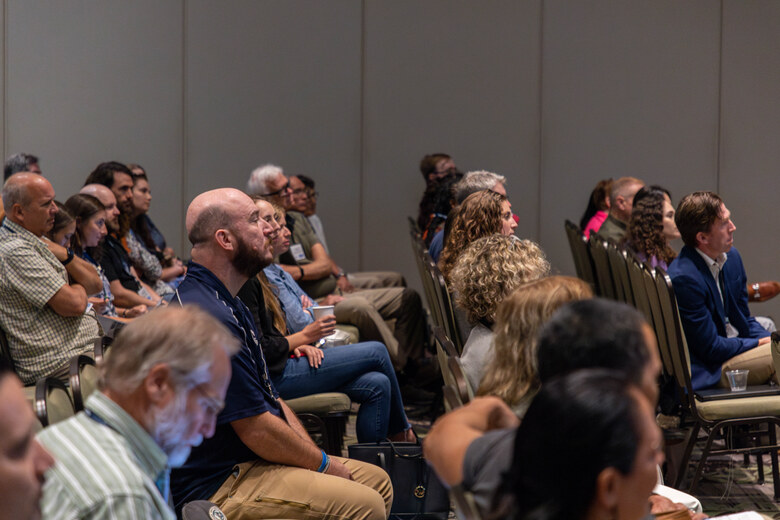
Delegates at ICSR 2024, Jekyll Island, Georgia. Photograph by Trey Cooper.
Welcome
From the Chair of ISRS
Dear Colleagues and Friends,
On behalf of the International Shellfish Restoration Society, it is my great honor to welcome you to ICSR 2026, the 22nd International Conference on Shellfish Restoration.
Since 1996, ICSR has brought together the global community of shellfish restoration practitioners (scientists, resource managers, tribal leaders, industry professionals, and community advocates) to share knowledge, forge partnerships, and advance the science and practice of restoration. This year we gather in the Pacific Northwest, in the heart of historic shellfish abundance and world-class restoration work.
ISRS was founded to ensure this community has a permanent home: a year-round network that sustains the connections forged at each conference. Whether you are a longtime ICSR participant or joining us for the first time, you are part of something important. Thank you for being here.
From the Chair of ICSR 2026
Dear Shellfish Friends, one and all,
Welcome to ICSR 2026! Puget Sound Restoration Fund is honored to co-host this year’s conference with the Squaxin Island Tribe, here in South Puget Sound. Thank you so much for being here and contributing to this big, global-spanning shellfish knowledge exchange, encompassing 12 countries, 33 Tribes and Indigenous communities, and 21 states. We are excited about diving into an intensive 3-day program, spanning 149 presentations, 29 shellfish and invertebrate species, and all the beautiful, complicated, challenging aspects of shellfish restoration in a changing world.
As we work to build abundance, resilience, and species richness in our coastal waters, it is equally wonderful to emulate that richness in our human communities. To follow the ways of the oyster, so to speak: attracting new recruits, building multi-generational structure, and nurturing diverse communities. I look forward to growing our shellfish network, along with our many molluscan friends, who continue to do their good work on shorelines throughout the world.
Schedule
At-a-Glance
| Day | Morning | Afternoon | Evening |
|---|---|---|---|
| Sunday Oct 4 |
– | Registration 3:00–8:00 p.m. |
Welcome Reception 6:00–8:00 p.m. |
| Monday Oct 5 |
Welcoming Address (Chairman Kris Peters) Keynote (Nicole Norris) + Sessions |
Sessions | Keynote (Shina Wysocki & Kyle Lentz) Lessons Learned Panel & Happy Hour 5:00–6:30 p.m. |
| Tuesday Oct 6 |
Keynotes (Chairman Leonard Forsman & Mitchell Gibbs) + Sessions |
Sessions Posters & Art 4:30–6:30 p.m. |
Traditional Salmon & Clam Cookout 6:30–8:30 p.m. |
| Wednesday Oct 7 |
Keynotes (Kura Paul-Burke & Eric Quaempts) Closing Remarks + Sessions |
Field Sessions depart 1:30–2:00 p.m. Golf Tournament shuttle departs 2:00 p.m. |
– |
| Thursday Oct 8 Post-Conference |
Oyster Bed Visit 9:00 a.m.–12:00 p.m. |
Native Olympia Oyster Collaborative (NOOC) Lunch 1:00–3:00 p.m. |
– |
* The main conference runs Sunday, October 4 through Wednesday, October 7. Thursday, October 8 is a post-conference day featuring optional field sessions and the Native Olympia Oyster Collaborative (NOOC) lunch.
* Regarding food service, a Welcoming Reception is provided on Sunday. Breakfast is provided Monday, Tuesday, and Wednesday. Coffee breaks are provided mid-morning and mid-afternoon. Lunches are provided Monday (buffet), Tuesday (buffet), and Wednesday (box lunches). A Happy Hour on Monday occurs during the Panel Discussion. A Traditional Salmon Cookout Dinner is provided Tuesday. Monday’s and Wednesday’s dinners are on your own.
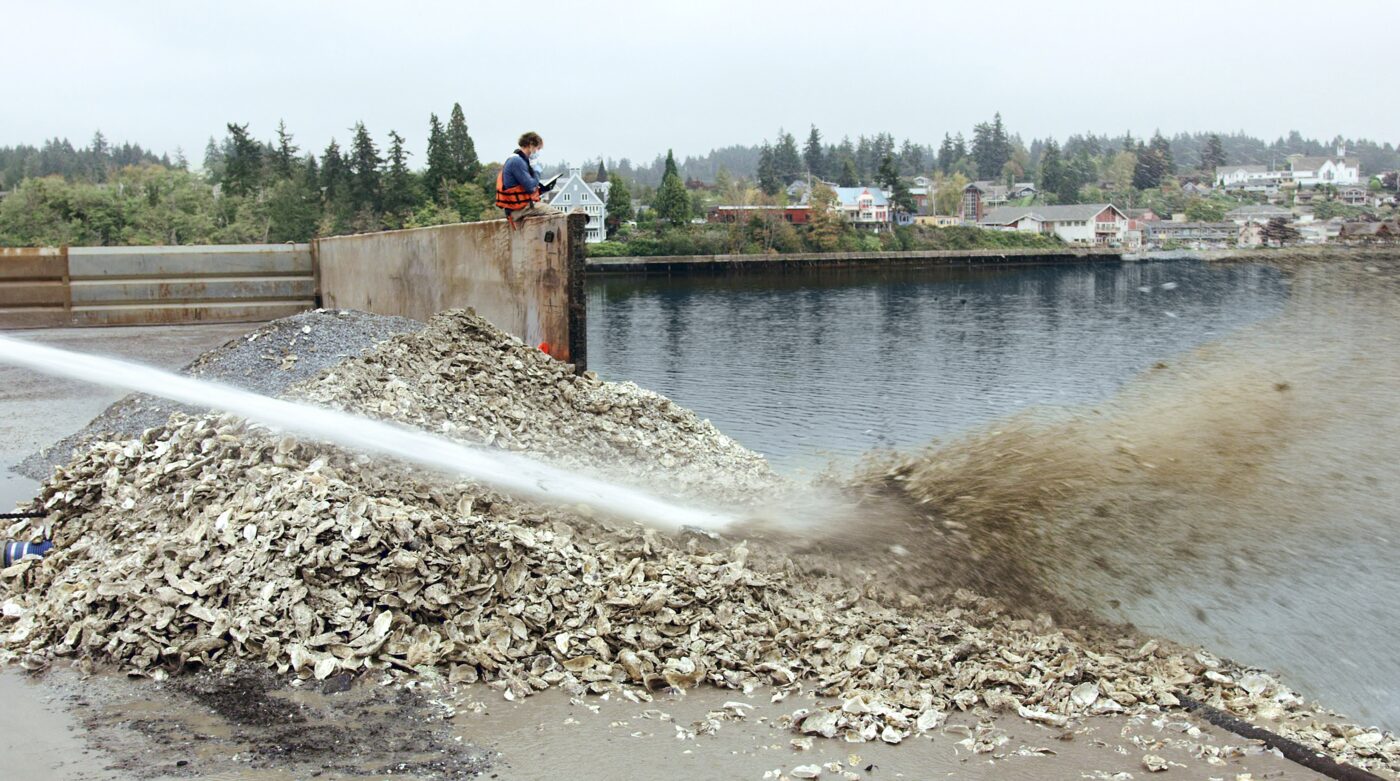
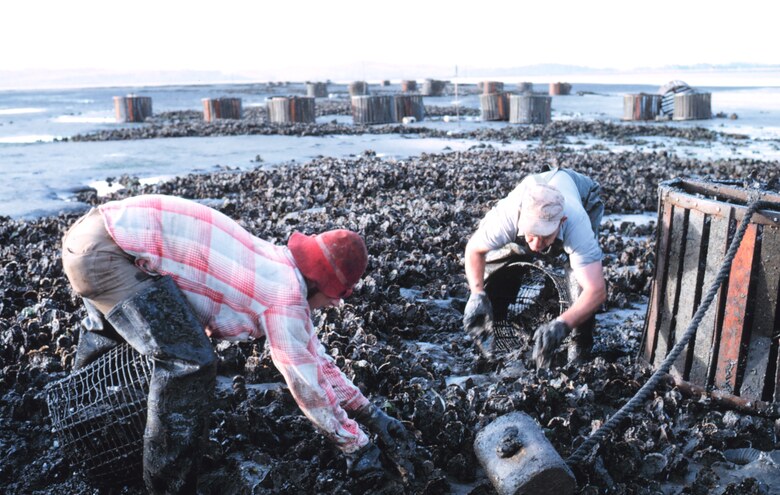
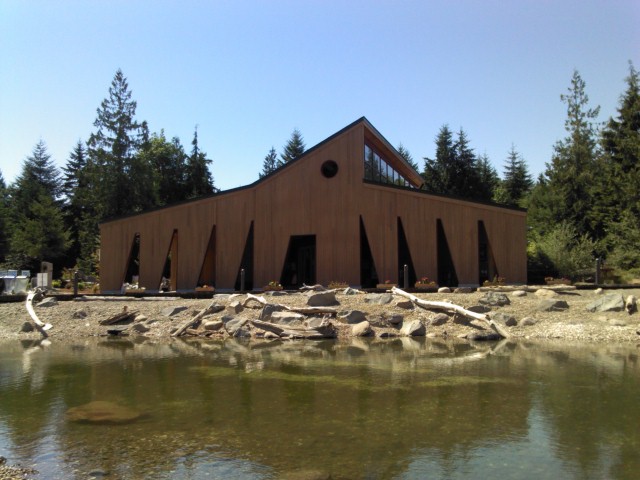
Washington waters, from left to right: cured shell returned to the beach at Liberty Bay; hand-picking oysters on the Willapa Bay tidelands in 1969; and the Squaxin Island Museum.
Conference
Overview
The International Conference on Shellfish Restoration (ICSR) provides a forum that draws attention to shellfish restoration, and fosters partnerships, initiatives, and the exchange of information necessary to further the science and practice of shellfish restoration. ICSR 2026 highlights the intersection of Indigenous knowledge, climate resilience, and modern restoration science.
Since the first ICSR was held on Hilton Head Island in South Carolina in 1996, this conference has been held worldwide: from the United States to Canada, Scotland, the Netherlands, Australia, and beyond. Unique in approach, ICSR fosters lasting collaborations and friendships among practitioners on the leading edge of molluscan shellfish restoration.
The 2026 conference comes to Puget Sound for the first time, co-hosted by the Squaxin Island Tribe and the Puget Sound Restoration Fund at the Squaxin Island Tribe’s Little Creek Casino Resort in Shelton, Washington. The conference will open with a Welcoming Address from Chairman Kris Peters of the Squaxin Island Tribe, honoring the deep cultural connections between the Squaxin peoples and shellfish resources.
The overall theme of ICSR 2026 is: Engaging Communities, Collaborating with Knowledge Holders, and Advancing Restorative Aquaculture. We anticipate attendees from all realms of restoration, including practitioners, researchers, growers, Indigenous communities, and natural resources managers.
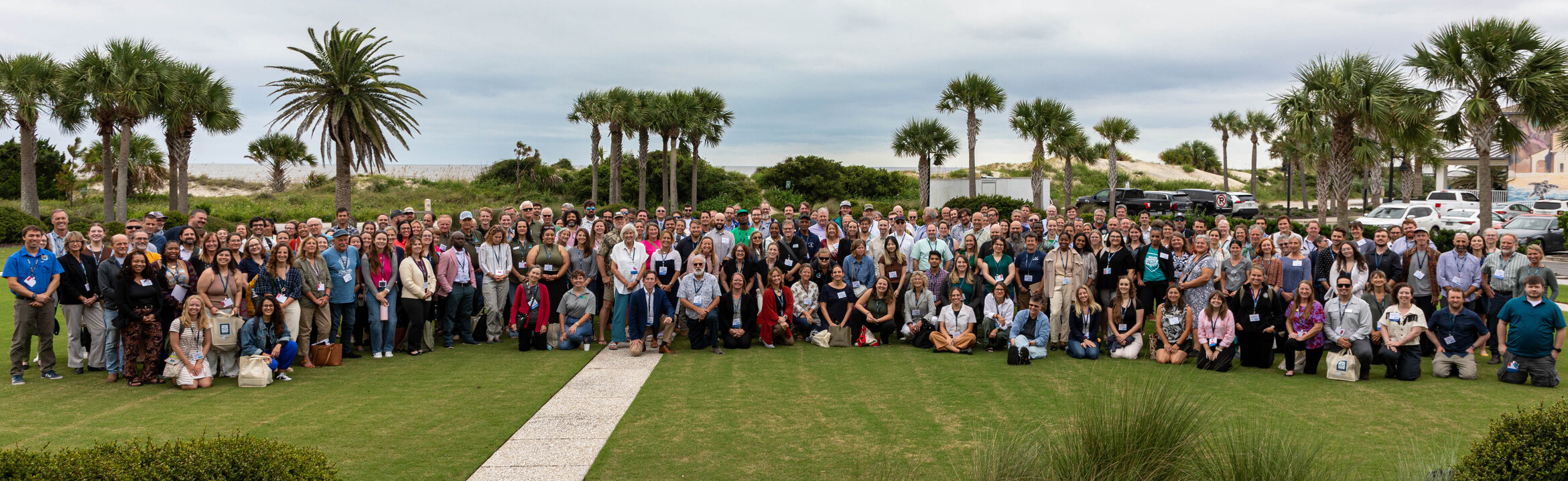
The delegates of ICSR 2024, Jekyll Island, Georgia.
The International Shellfish Restoration Society
After ICSR 2024, the community behind the conference set out to become more than a meeting convened anew each cycle. The International Shellfish Restoration Society (ISRS) was incorporated as a nonprofit in June 2025 to carry the conference forward and to give that community a standing home: one that can sustain the collaborations, the science, and the relationships between conferences rather than rebuilding them each time.
Sponsors



& Fishery Sciences
S'Klallam Tribe
Tribal Community
of Fish & Wildlife

Sea Grant Consortium

Growers Association
Exhibitors &
Committees
ICSR 2026 Exhibitors
Exhibitors will be located in the poster hall and available throughout the conference. The following organizations are participating as exhibitors at ICSR 2026:
- Olympia Oysters
- National Shellfisheries Association
- The Nature Conservancy
- Snail-Dyed Fabrics from Mexico
- Washington Sea Grant / Indigenous Aquaculture Network
- Puget Sound Restoration Fund
- Suquamish Tribe
- Washington Department of Fish & Wildlife
- Reef Ball Foundation
- GRoW Oyster Reefs
- Chugach Regional Resources Commission
Planning Committee
- Betsy Peabody, ICSR 2026 Chair, Puget Sound Restoration Fund
- Viviane Barry, Suquamish Tribe
- Ryan Crim, Puget Sound Restoration Fund
- Aaron Kornbluth, ISRS
- Julieta Martinelli, WA Dept. of Fish & Wildlife
- Lisa Paton, ISRS
- Phoebe Racine, The Nature Conservancy
- Elsa Schwartz, Puget Sound Restoration Fund
- LaDon Swann, National Sea Grant, Aquaculture Liaison
- Bill Taylor, Taylor Shellfish
- Kerstin Wasson, Elkhorn Slough NERR; NOOC
Program Team
- Julieta Martinelli, Program Chair, WA Dept. of Fish & Wildlife
- Peter Kingsley-Smith, Co-Chair, Independent Shellfish Ecologist
- Ryan Crim, Puget Sound Restoration Fund
- Michael Doall, Stony Brook University
- Philine zu Ermgassen, Native Oyster Restoration Alliance
- Matthew Gray, Univ. of Maryland Center for Environmental Science
- Jeff Hetrick, Alutiiq Pride Marine Institute
- Dominic McAfee, Adelaide University
- Betsy Peabody, Puget Sound Restoration Fund
- Melissa Poe, Washington Sea Grant, Univ. of Washington
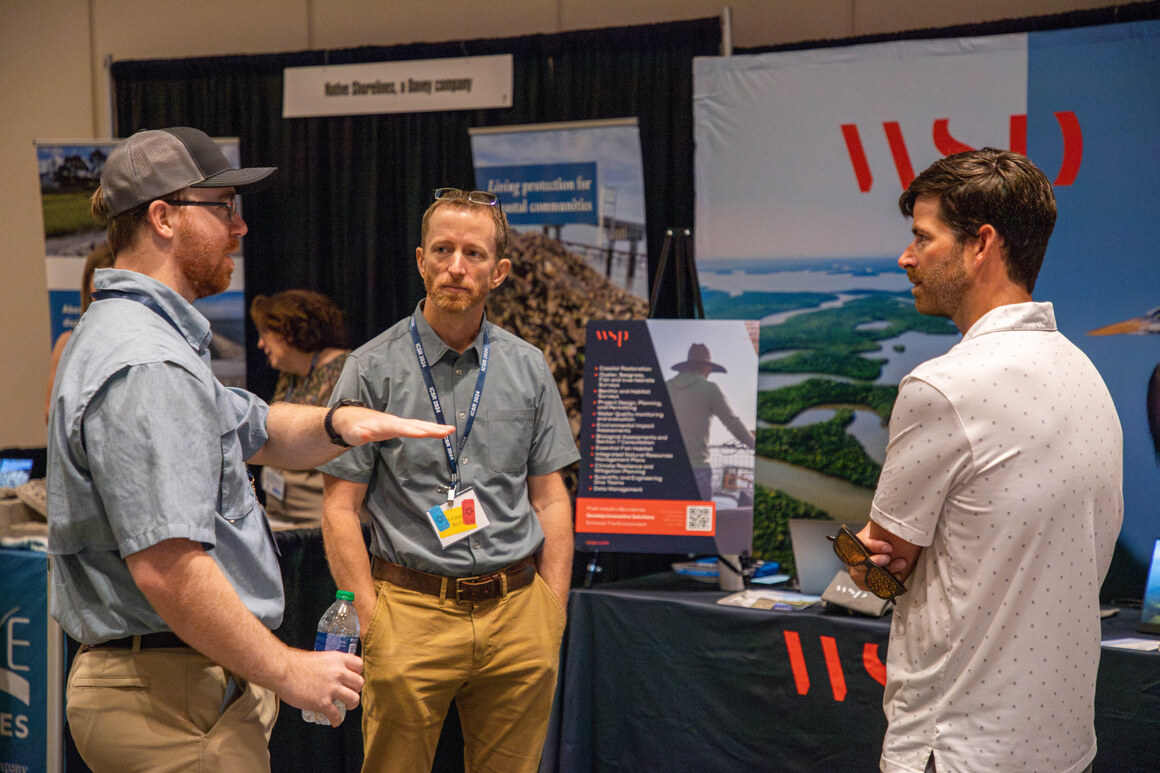
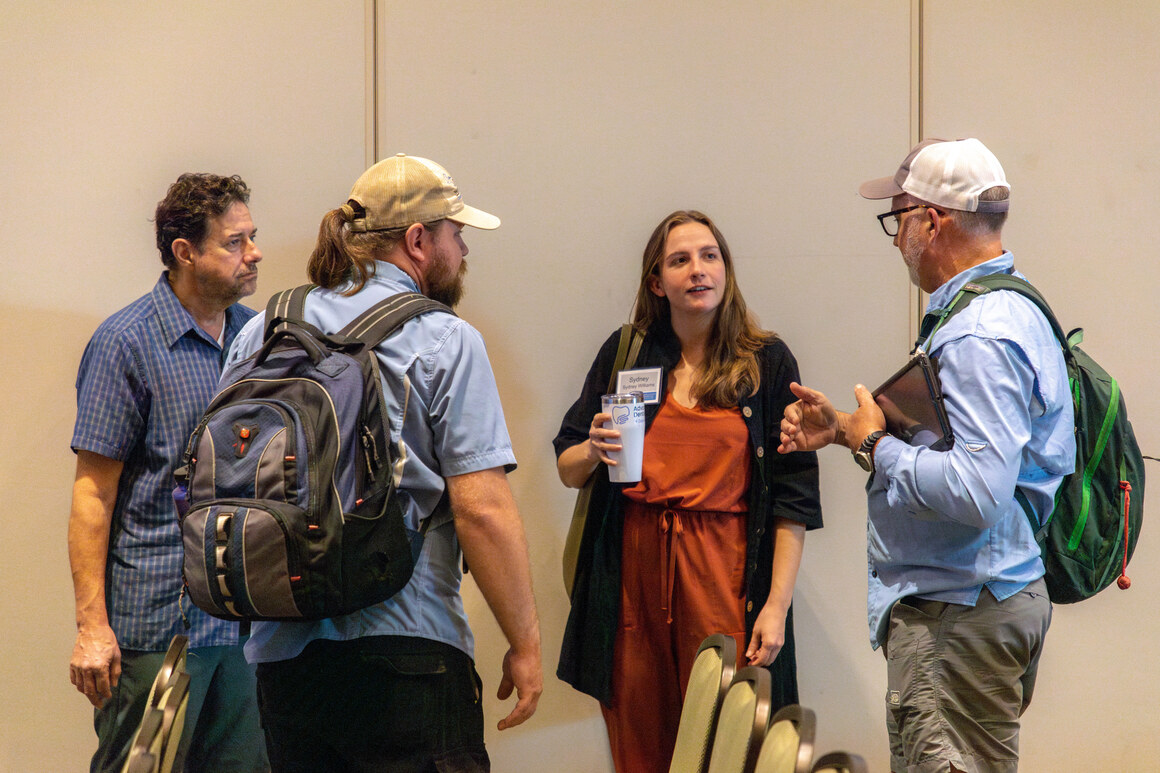
The exhibit hall and the spaces between sessions at ICSR 2024.
Important Conference
Information
Registration Information
To participate in any aspect of the conference, you must be registered. Badges are required for all technical and social events. The Registration Desk is located in the Tower 2 Lobby of the Little Creek Casino Resort.
CONTINUING EDUCATION CREDITS
ICSR 2026 has been pre-approved for up to 10 Continuing Education Credits (CECs) through the Society for Ecological Restoration (SER) Certified Ecological Restoration Practitioner (CERP) program. Attendance verification is required to receive credits. Sign-in sheets will be available at the conference; attendees may also self-report using a Certificate of Completion.
For questions, contact certification@ser.org.
Keynote Presentations
- Chairman Kris Peters, Squaxin Island Tribe; Welcoming Address, Monday, October 5
- Chairman Leonard Forsman, Suquamish Tribe; Keynote Address, Tuesday, October 6
- Nicole (Coly) Norris, Halalt First Nation, British Columbia; Keynote Address, Monday, October 5
- Mitchell Gibbs, Dunghutti Nation, University of Sydney; Keynote Address, Tuesday, October 6
- Kura Paul-Burke, Ngāti Awa, Ngāti Whakahemo, Ngāti Mākino, University of Waikato, Aotearoa New Zealand; Keynote Address, Wednesday, October 7
- Eric Quaempts, Confederated Tribes of the Umatilla Indian Reservation; Keynote Address, Wednesday, October 7
- Kyle Lentz, Chelsea Farms & Pacific Coast Shellfish Growers Association; Keynote Address, Monday, October 5
- Shina Wysocki, Chelsea Farms; Keynote Address, Monday, October 5
Technical Program
ICSR 2026 features 15 scientific sessions with keynote presentations, panel discussions, and contributed oral, poster, and lightning talk presentations:
- S01: Indigenous-led Contemporary Restoration
- S02: Restoring Ancestral Shellfish Mariculture
- S03: Hatchery Innovations, Upscaling, & Industry
- S04: Restorative Aquaculture
- S05: Genetics, Disease, & Biosecurity
- S06: Using Historical and Geohistorical Data to Inform Restoration Practices
- S07: Urban Shellfish Restoration
- S08: Restoration of Other Molluscs & Invertebrates
- S09: Lessons Learned from Ostrea Communities of Practice
- S10: Resilience Building, Connectivity, & Seascape Approaches
- S11: Outreach, Creative Communications, & Storytelling
- S12: Shell Recycling
- S13: Approaches to Substrate Supplementation
- S14: Freshwater Mussel Restoration
- S15: Ostrea lurida Restoration Efforts
Important Conference
Information
Networking Events
Welcome Reception
Sunday, October 4 from 6:00 p.m. to 8:00 p.m.
Little Creek Casino Resort
Lessons Learned Panel & Happy Hour
Monday, October 5
Sharing worst mistakes and best lessons from the field.
Panelists: Julie Barber, Boze Hancock, Jeff Hetrick, and Betsy Peabody
Poster Session & Art Show
Tuesday, October 6, 4:30–6:30 p.m.
Open poster viewing and art show, with local artists sharing shellfish-inspired photography, books, and jewelry.
Traditional Salmon & Clam Cookout
Tuesday, October 6, 6:30 p.m. onwards
A traditional salmon and clam cookout hosted by the Squaxin Island Tribe at Little Creek Casino Resort.
Field Sessions, Wednesday, October 7
Guided, site-based learning at active restoration sites, working shellfish farms, Tribal cultural sites, and conservation hatcheries across South Puget Sound, led by regional scientists and practitioners. Sessions depart between 1:30 and 2:00 p.m. Sign up during registration. Capacity is limited.
- Olympia Oyster Company Tour
- Chew Center / Conservation Hatchery + Fresh Oysters
- Squaxin Island Museum Home of Sacred Belongings
- Kayak Paddle to Hope Island
- Guided Boat Tour of South Sound
- Golf Tournament
The optional Golf Tournament is a relaxed social outing for attendees; pay-at-course and not included in registration.
Optional Low Tide Field Session
Thursday, October 8, 9:00 a.m.–12:00 p.m. (Post-Conference)
A guided field study of natural Olympia oyster beds. Open to all registered attendees. About a 40-minute drive. Knee boots and appropriate beach attire recommended.
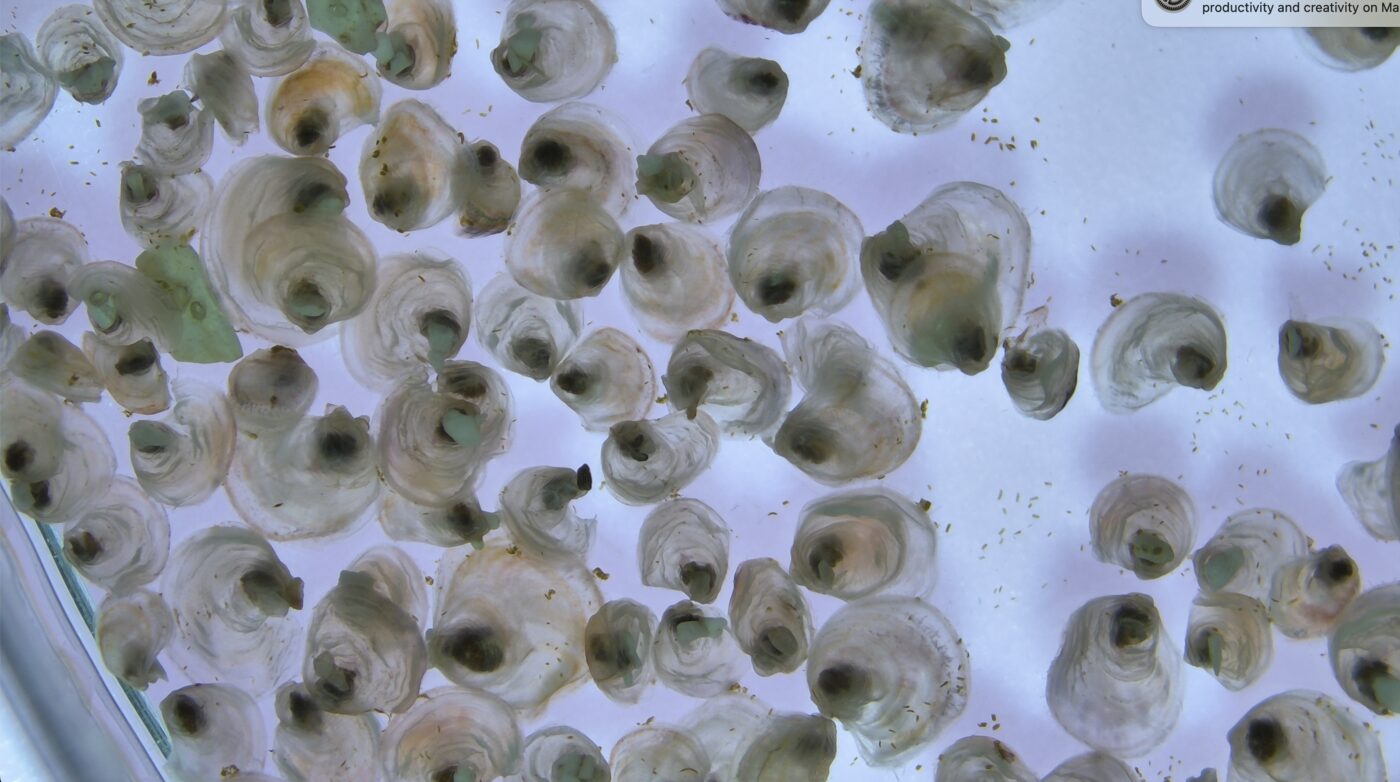
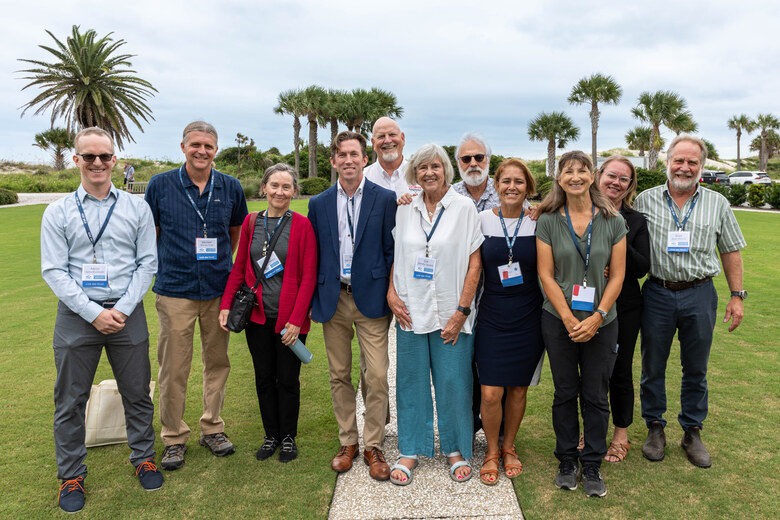
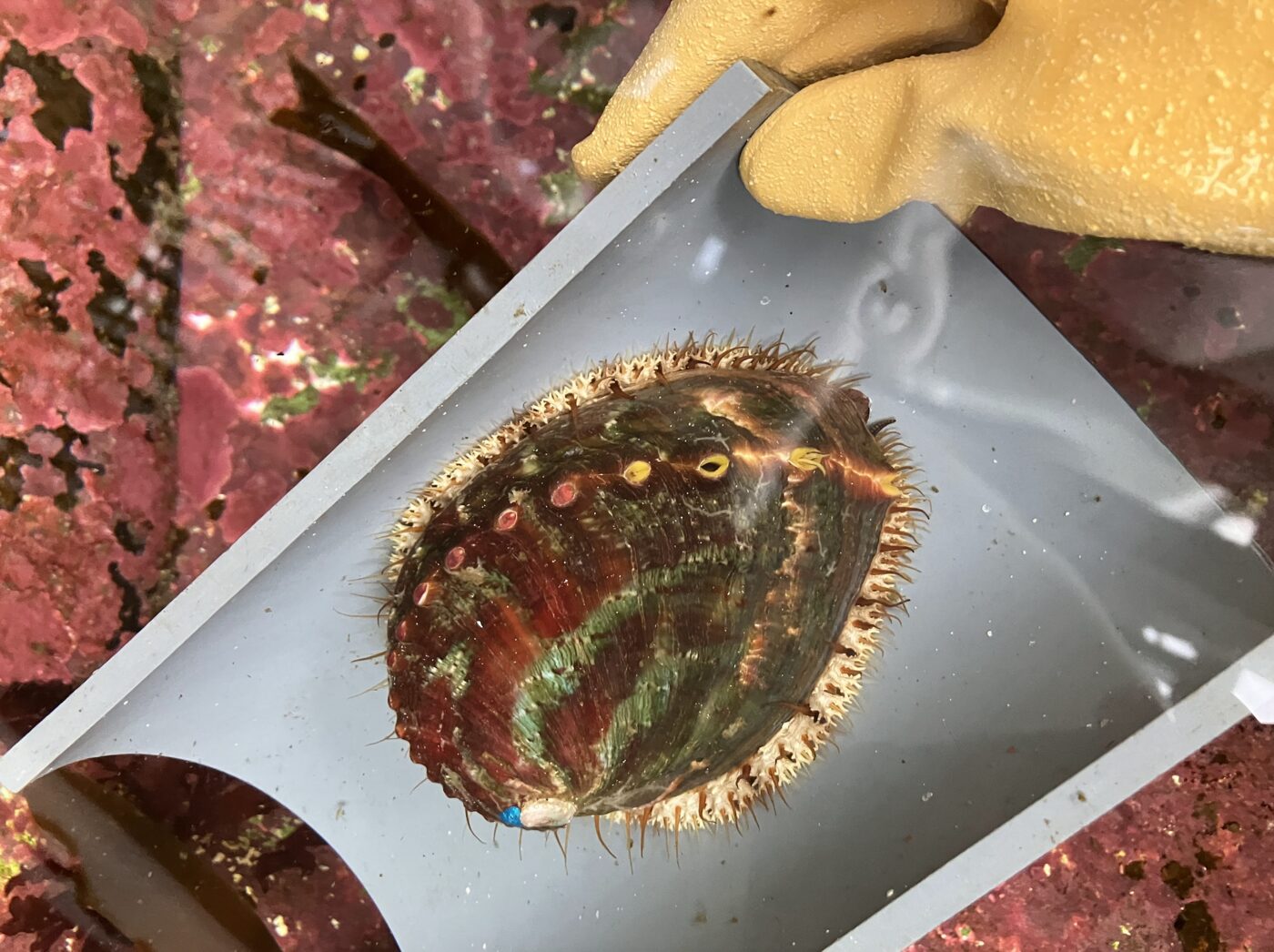
From left to right: Olympia oysters on cultch; delegates at ICSR 2024; and a pinto abalone.
Information
for Presenters
Presentation File Submission
Bring your presentation file (PowerPoint or PDF) on a USB drive to load onto the session laptop before your session. Someone at the Registration Desk will be there to take your presentation. Do this the day before your session, or the morning of it at the latest.
Oral Presentations
In most of the sessions, fifteen minutes will be allotted for a contributed oral talk, including 12 minutes for presentation and three minutes for discussion. Several sessions, however, are organized differently. Session moderators will adhere to the appropriate time limitations established for their session. Speakers should check in with moderators at least 15 minutes prior to session start. Each room will be equipped with a projector, screen, laptop computer, and microphone.
Lightning talks are 5-minute presentations with a maximum of 5 slides. No Q&A during the session; presenters are encouraged to make themselves available during breaks. Lightning talk presenters should check in with the session moderator before the session.
Poster Presentations
Posters will be displayed in the poster hall and available for viewing throughout the conference. Each poster presenter will have access to a foam core tackboard measuring 4’ (1.2 m) high by 4’ (1.2 m) wide and pushpins will be provided.
Photographs of presentations are not allowed without the express prior consent of the presenter.
Applies to oral presentations, lightning talks, and posters.
Poster Set-Up
Sunday, October 4, 5:00 p.m. to 6:00 p.m.
Monday, October 5 and Tuesday, October 6, 7:00 a.m. to 8:30 a.m., or during coffee breaks
Artist Set-Up
Artists exhibiting on Tuesday, October 6 should set up before 8:30 a.m. or during the coffee breaks.
Poster Session & Art Show
Tuesday, October 6, 4:30 p.m. to 6:30 p.m.
Poster presenters are to be present at their poster during this time.
Poster Removal
Wednesday, October 7, before 1:00 p.m.
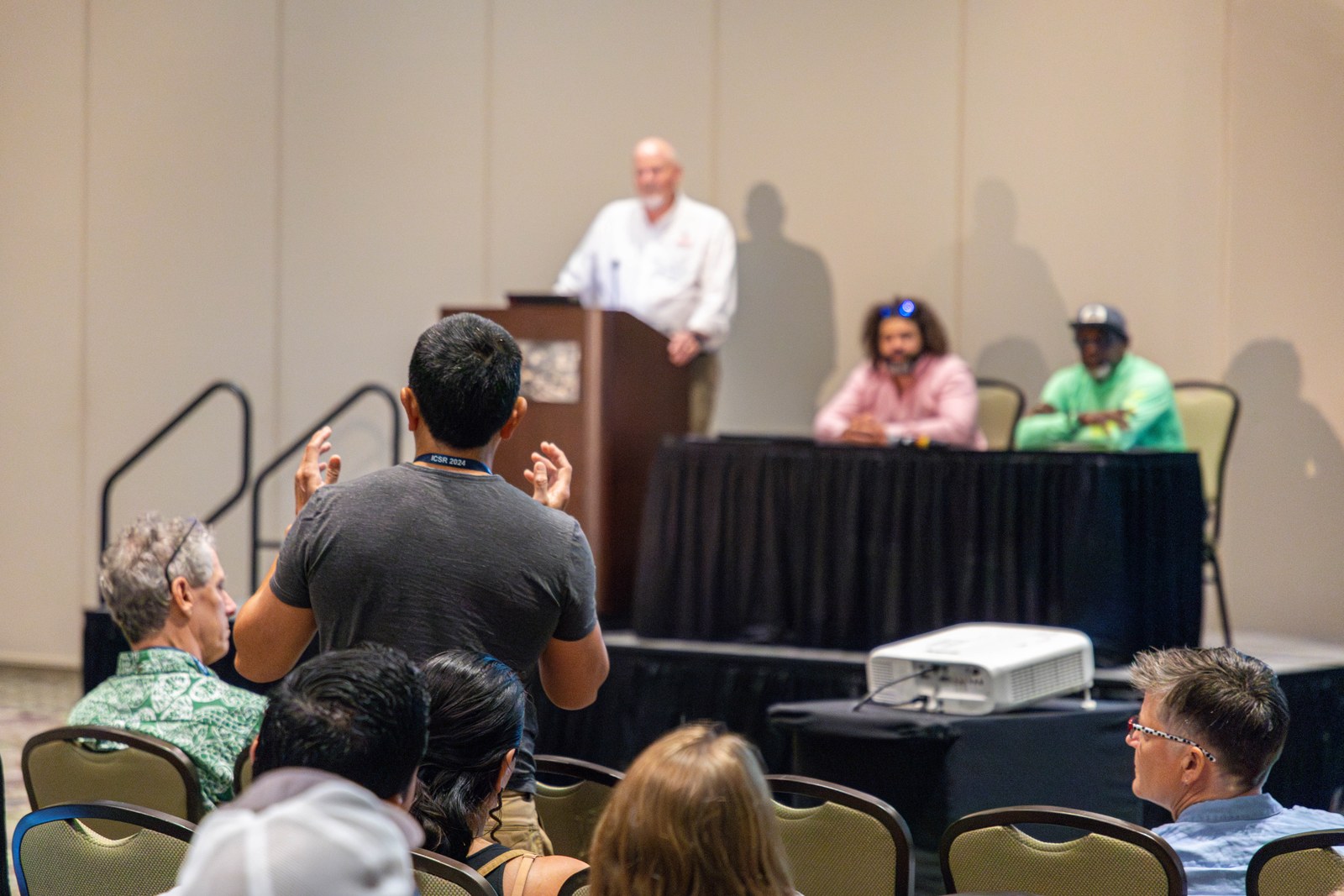
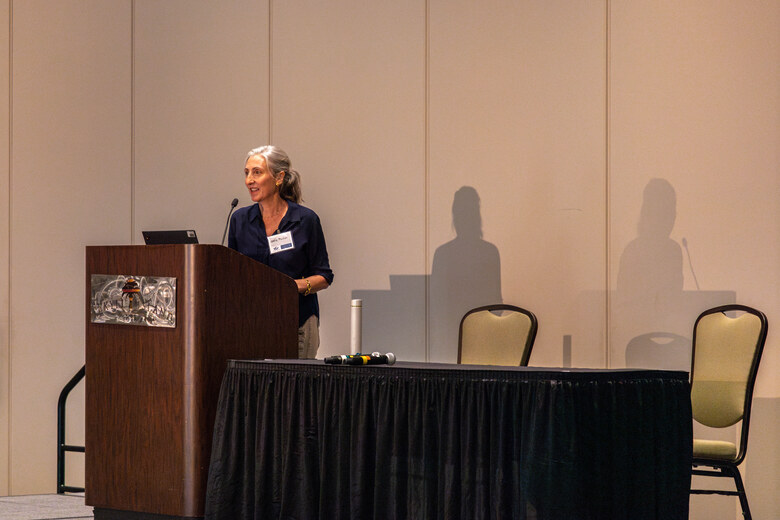
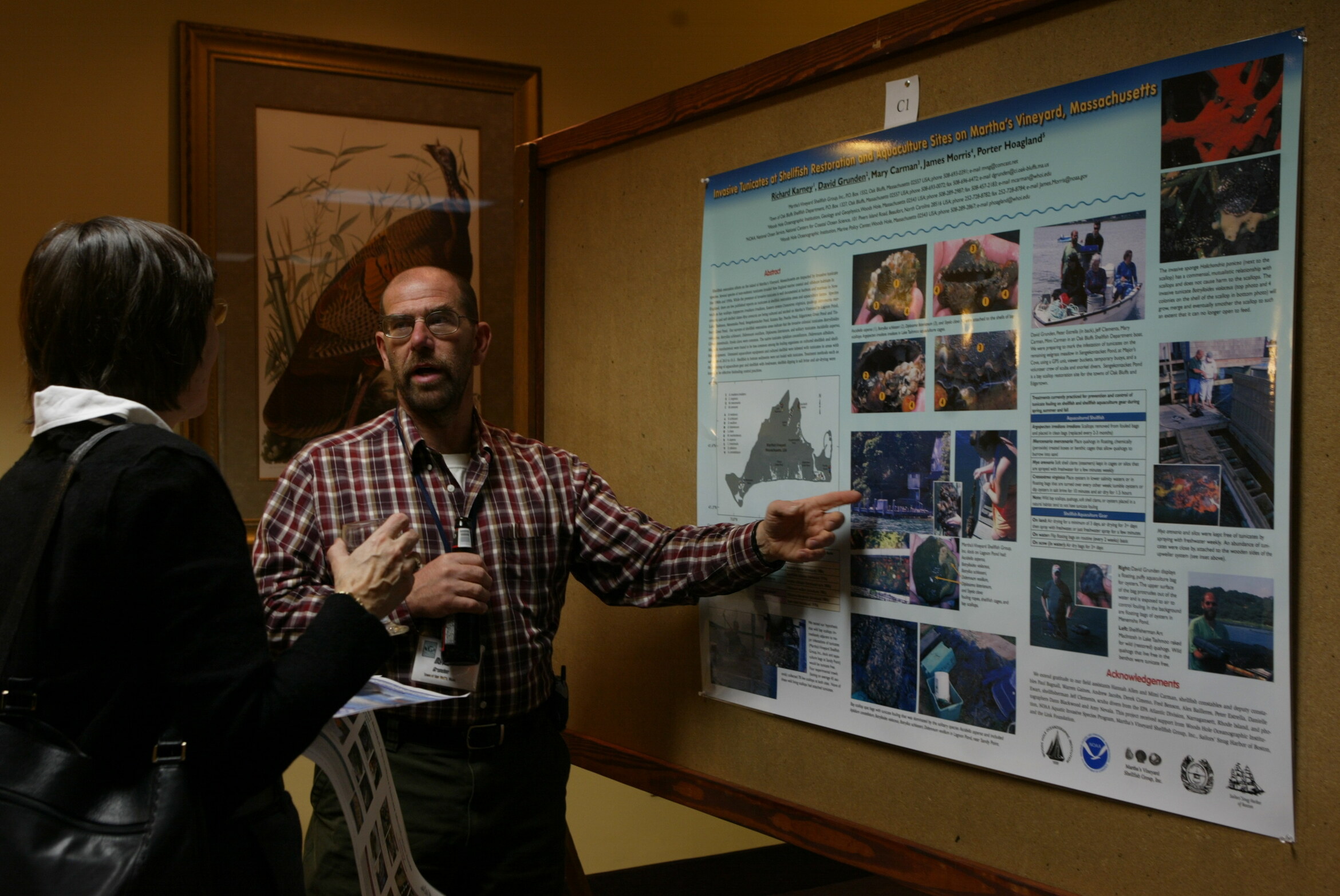
From left to right: a question from the floor, a keynote address, and a poster session at ICSR 2024.
Schedule of Presentations
& Activities
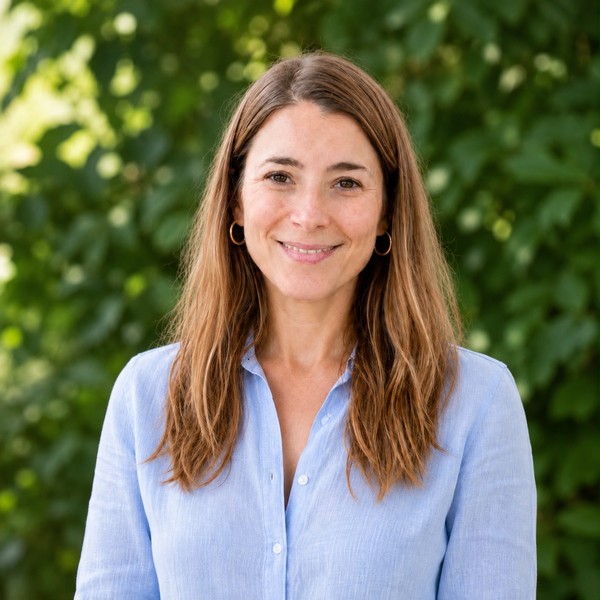
Welcome to ICSR 2026. Over the next three days, you’ll find a program built to reflect the full breadth of our field: from Indigenous-led restoration to hatchery science, across native oysters, mussels, and clam gardens. I’m honored to help bring this community together in the heart of the Salish Sea.
Program Chair, ICSR 2026; Washington Department of Fish and Wildlife
SUNDAY, OCTOBER 4, 2026
ICSR 2026 Registration
Tower 2 Hotel Lobby, Little Creek Casino Resort
Welcome Reception
SA-HEH-WA-MISH (Room 1)
MONDAY, OCTOBER 5, 2026
ICSR 2026 Registration
Tower 2 Hotel Lobby
Breakfast
Event Center
Plenary: Welcoming Address
Chairman Kris Peters, Squaxin Island Tribe
Event Center
Welcome to ICSR 2026
Betsy Peabody & Dot Leonard
Event Center
Keynote Address
Nicole Norris, Halalt First Nation
Event Center
Coffee Break
Event Center
Concurrent Sessions 1
Room 1: S02 Restoring Ancestral Shellfish Mariculture • Room 2: S13 Approaches to Substrate Supplementation • Room 3: S04 Restorative Aquaculture
Lunch (Provided)
Event Center
Concurrent Sessions 2
Room 1: S02 Ancestral Mariculture • Room 2: S13 Substrate Supplementation & S12 Shell Recycling • Room 3: S04 Restorative Aquaculture & S10 Resilience Building, Connectivity, & Seascape Approaches
Coffee Break
Event Center
Concurrent Sessions 3
Room 1: S11 Outreach, Creative Comms, & Storytelling • Room 2: S12 Shell Recycling • Room 3: S10 Resilience Building, Connectivity, & Seascape Approaches
Break
Event Center
Keynote Remarks
Shina Wysocki & Kyle Lentz, Chelsea Farms
Event Center
Lessons Learned Panel & Happy Hour
Event Center
Dinner on Your Own
Room names and locations are on the map at the end of this booklet.
Room 1 is SA-HEH-WA-MISH, Room 2 is SQUI-AITL, and Room 3 is STEH-CHASS.
Schedule
(Tuesday)
TUESDAY, OCTOBER 6, 2026
ICSR 2026 Registration
Tower 2 Hotel Lobby
Breakfast
Event Center
Keynote Address
Chairman Leonard Forsman, Suquamish Tribe
Event Center
Keynote Address
Mitchell Gibbs, Dunghutti Nation
Event Center
Coffee Break
Event Center
Concurrent Sessions 1
Room 1: S01 Indigenous-led Contemporary Restoration • Room 2: S08 Other Molluscs & Invertebrates • Room 3: S03 Hatchery Innovations, Upscaling, & Industry
Lunch (Provided)
Event Center
Concurrent Sessions 2
Room 1: S09 Ostrea Communities of Practice • Room 2: S08 Other Molluscs & Invertebrates • Room 3: S03 Hatchery Innovations, Upscaling, & Industry & S05 Genetics, Disease, & Biosecurity
Coffee Break
Event Center
Concurrent Sessions 3
Room 1: S09 Ostrea Communities of Practice • Room 2: S07 Urban Shellfish Restoration • Room 3: S05 Genetics, Disease, & Biosecurity
Poster Session & Art Show
Event Center
Traditional Salmon & Clam Cookout
Squaxin Island Tribe’s Little Creek Casino Resort
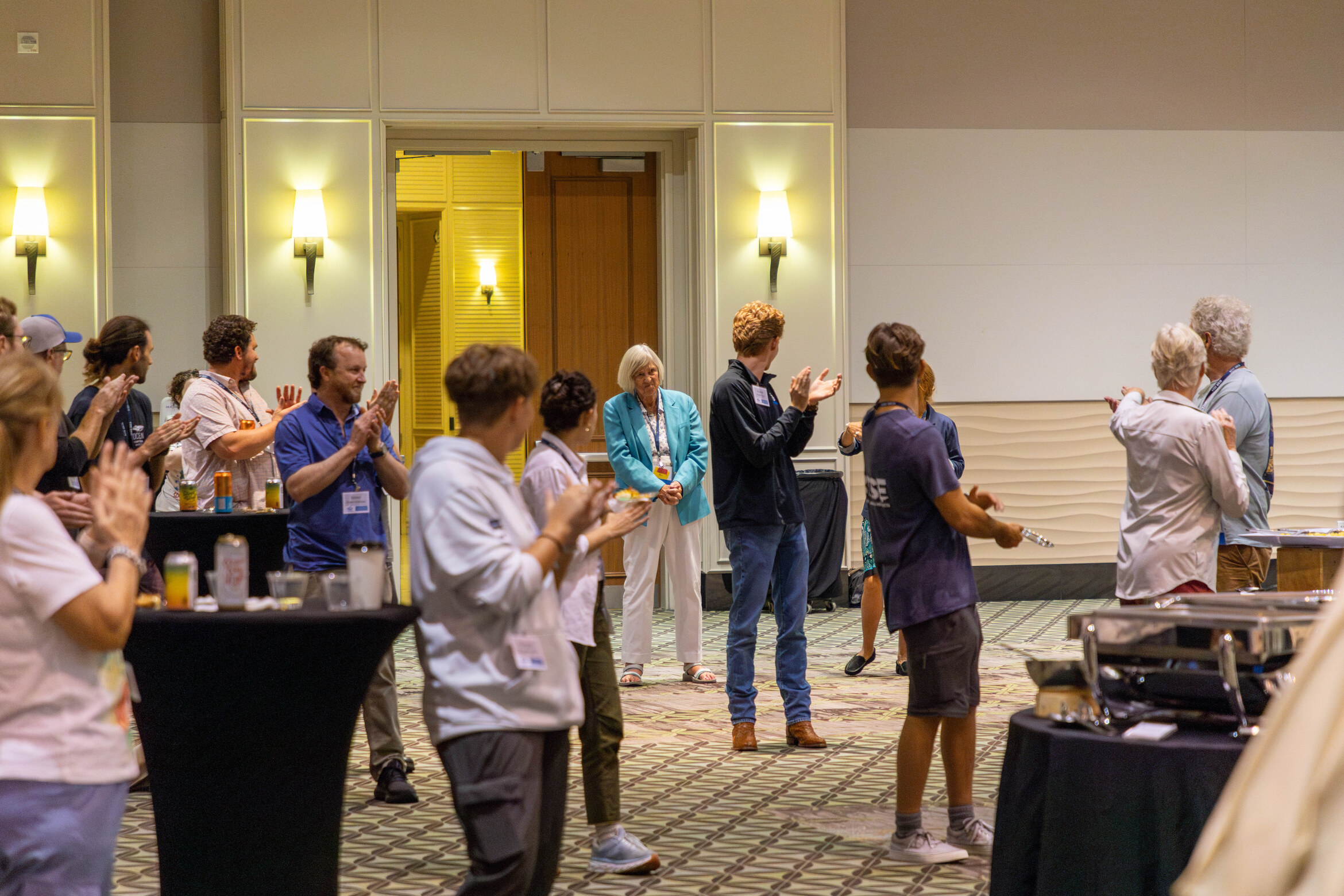
Evening gatherings bring the ICSR community together.
Room names and locations are on the map at the end of this booklet.
Room 1 is SA-HEH-WA-MISH, Room 2 is SQUI-AITL, and Room 3 is STEH-CHASS.
Schedule
(Wednesday
& Thursday)
WEDNESDAY, OCTOBER 7, 2026
Breakfast
Event Center
Keynote Address
Kura Paul-Burke, Ngāti Awa, Ngāti Whakahemo, Ngāti Mākino, University of Waikato, Aotearoa New Zealand
Event Center
Keynote Address
Eric Quaempts, Confederated Tribes of the Umatilla Indian Reservation
Event Center
Closing Remarks
Dot Leonard & Betsy Peabody
Event Center
Coffee Break
Event Center
Concurrent Sessions
Room 1: S15 Ostrea lurida Restoration Efforts • Room 2: S06 Using Historical & Geohistorical Data • Room 3: S14 Freshwater Mussel Restoration
Box Lunch (Provided)
All posters must be removed before 1:00 p.m.
Event Center
Field Sessions & Golf Tournament
Depart 1:30–2:00 p.m.: Olympia Oyster Company Tour, Chew Center Hatchery, Squaxin Island Museum, Kayak Paddle, Boat Tour, Golf Tournament. See the Field Sessions listing on page 9 for details.
THURSDAY, OCTOBER 8, 2026: POST-CONFERENCE
Breakfast on Your Own
Oyster Bed Visit
A guided field study of natural Olympia oyster beds. Open to all registered attendees.
North Bay, Case Inlet (~40-minute drive by shuttle bus). Knee boots and appropriate beach attire recommended.
NOOC Lunch
Native Olympia Oyster Collaborative (NOOC) networking lunch.
Chelsea Farms Restaurant
Thursday, October 8 is a post-conference day. Participation in the low tide field session requires registration.
Keynote
& Plenary
Speakers
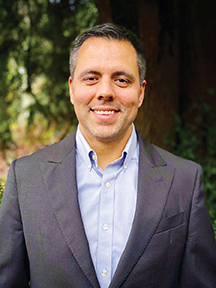
Chairman Kris Peters
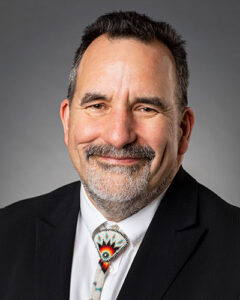
Chairman Leonard Forsman
Nicole (Coly) Norris
Keynote & Plenary
Speakers continued
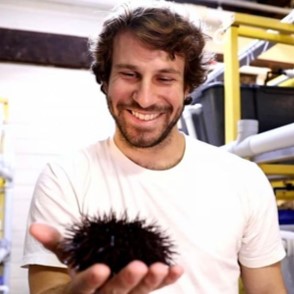
Mitchell Gibbs
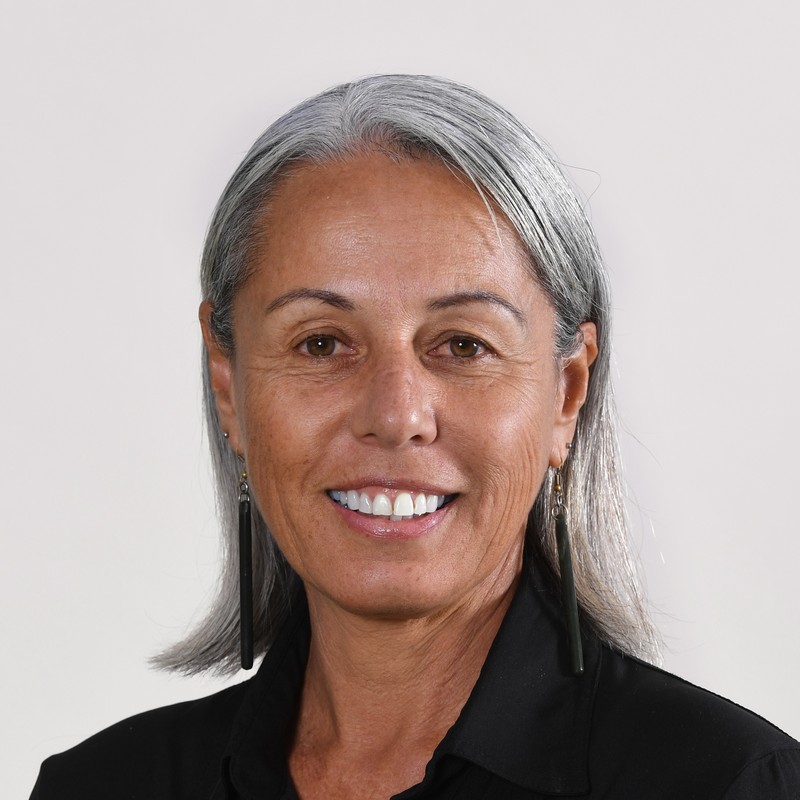
Kura Paul-Burke
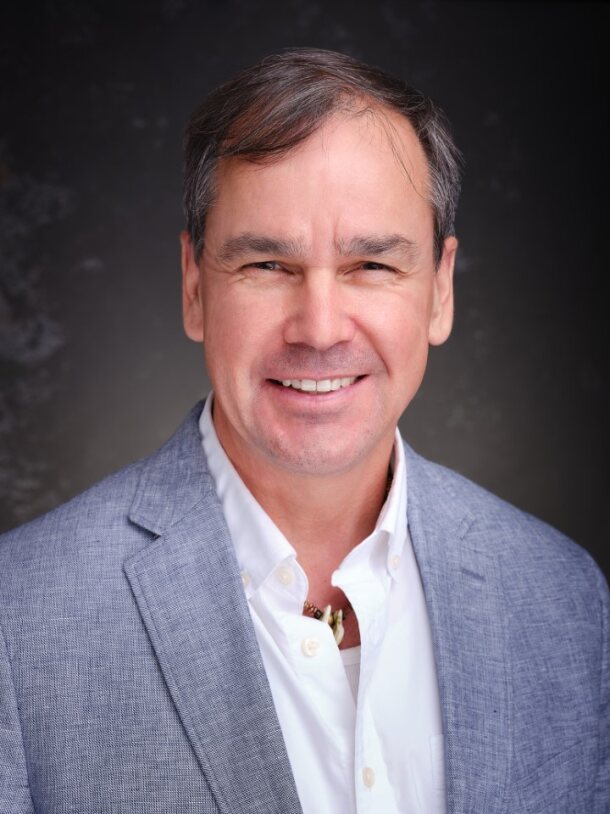
Eric Quaempts
Keynote & Plenary
Speakers continued
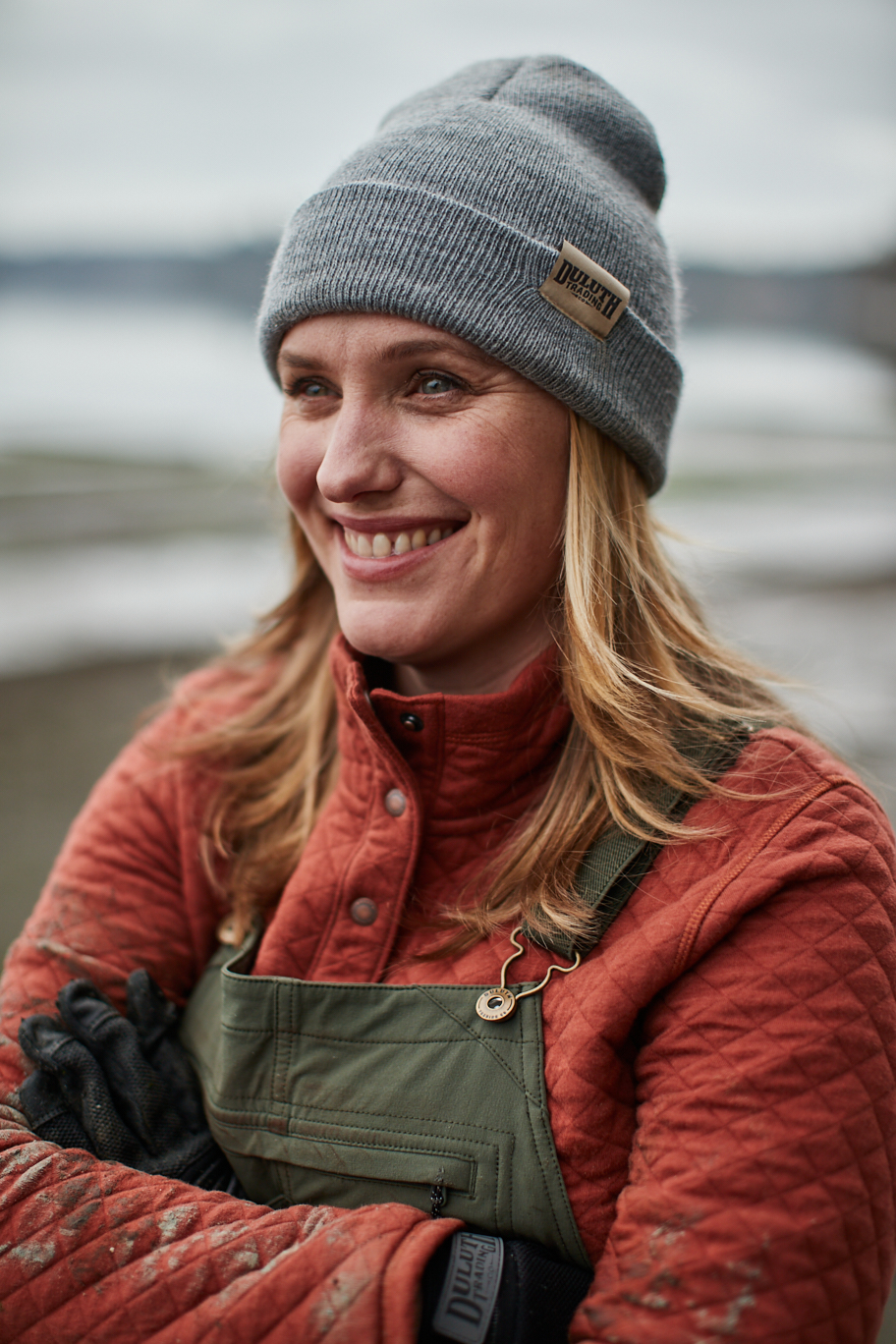
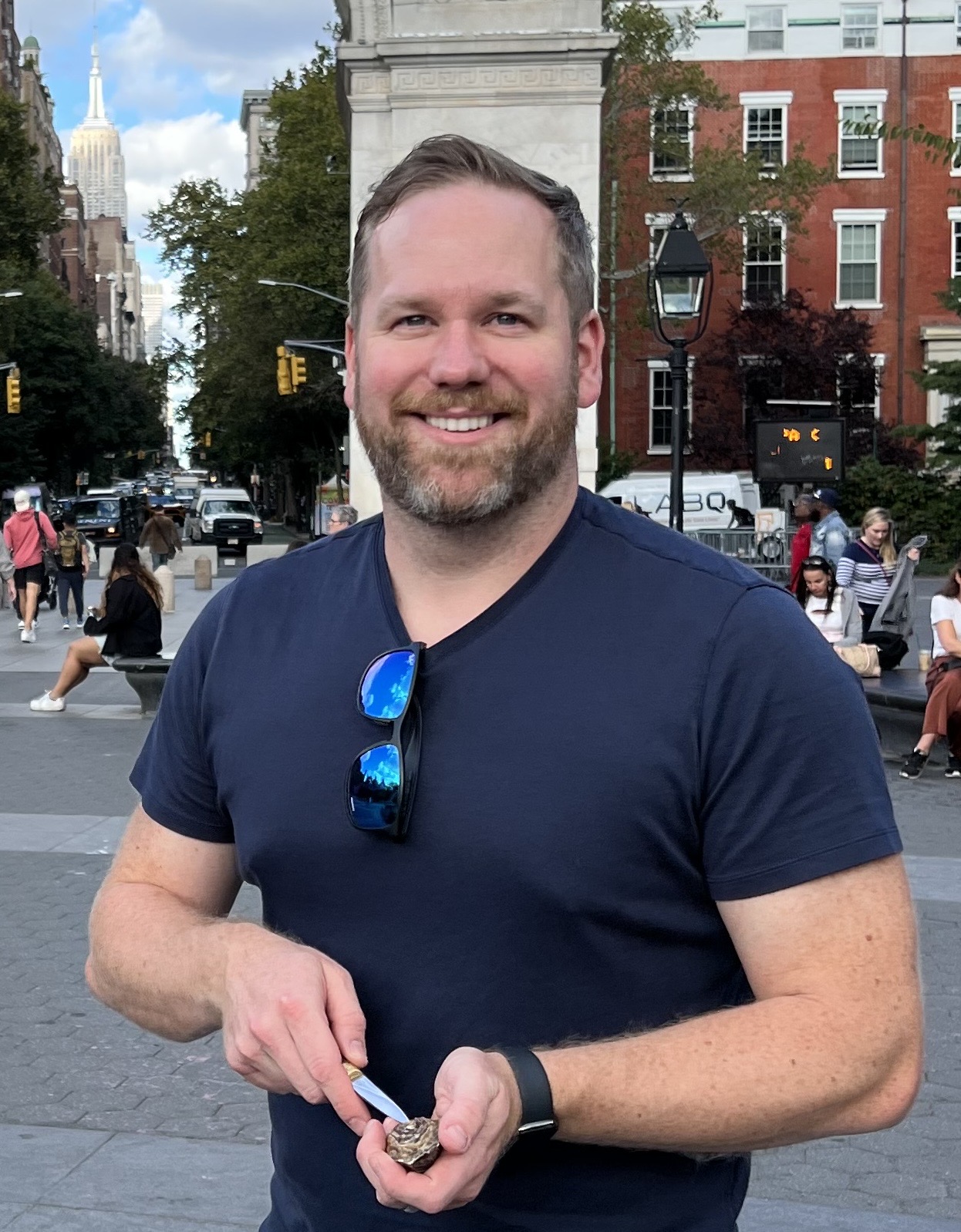
Shina Wysocki & Kyle Lentz
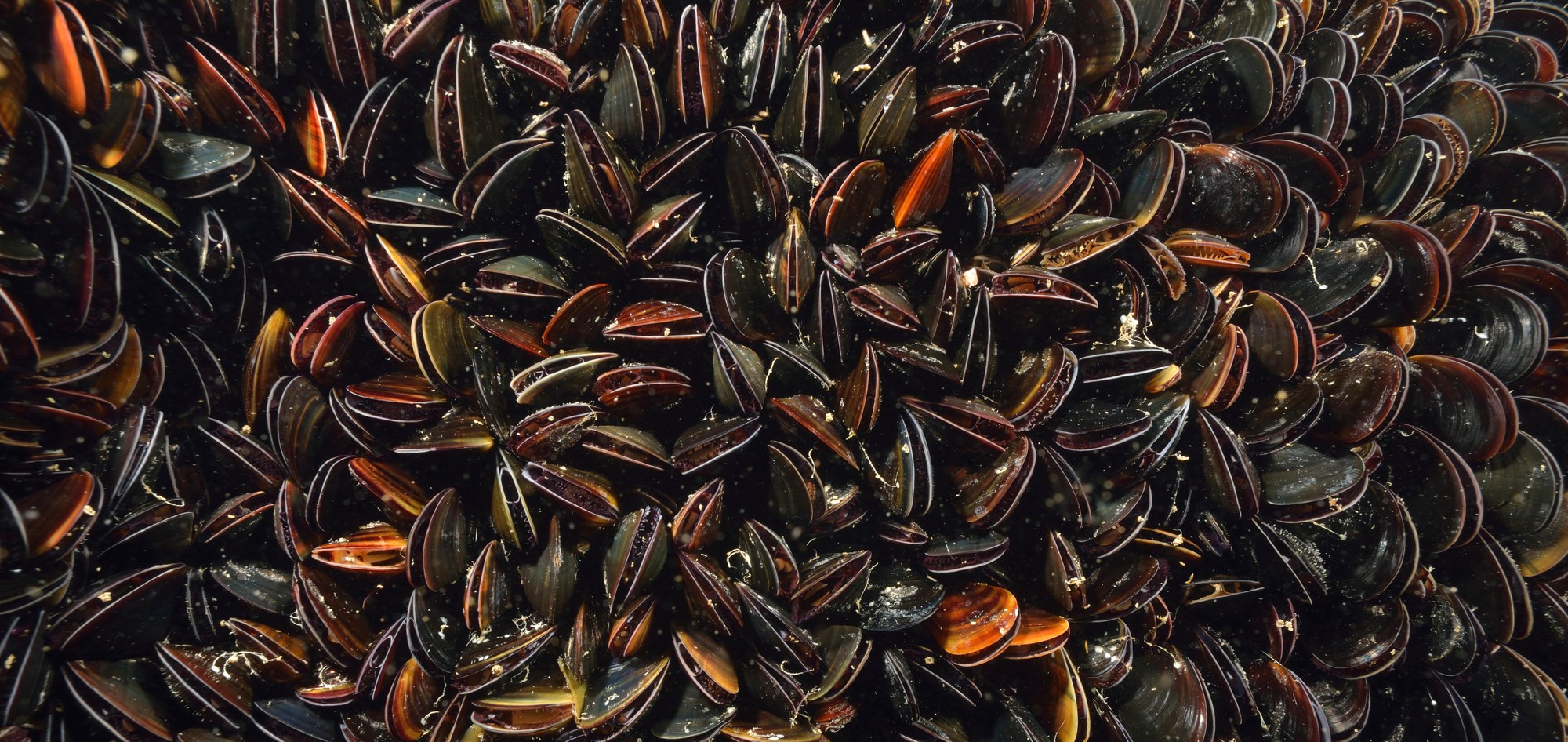
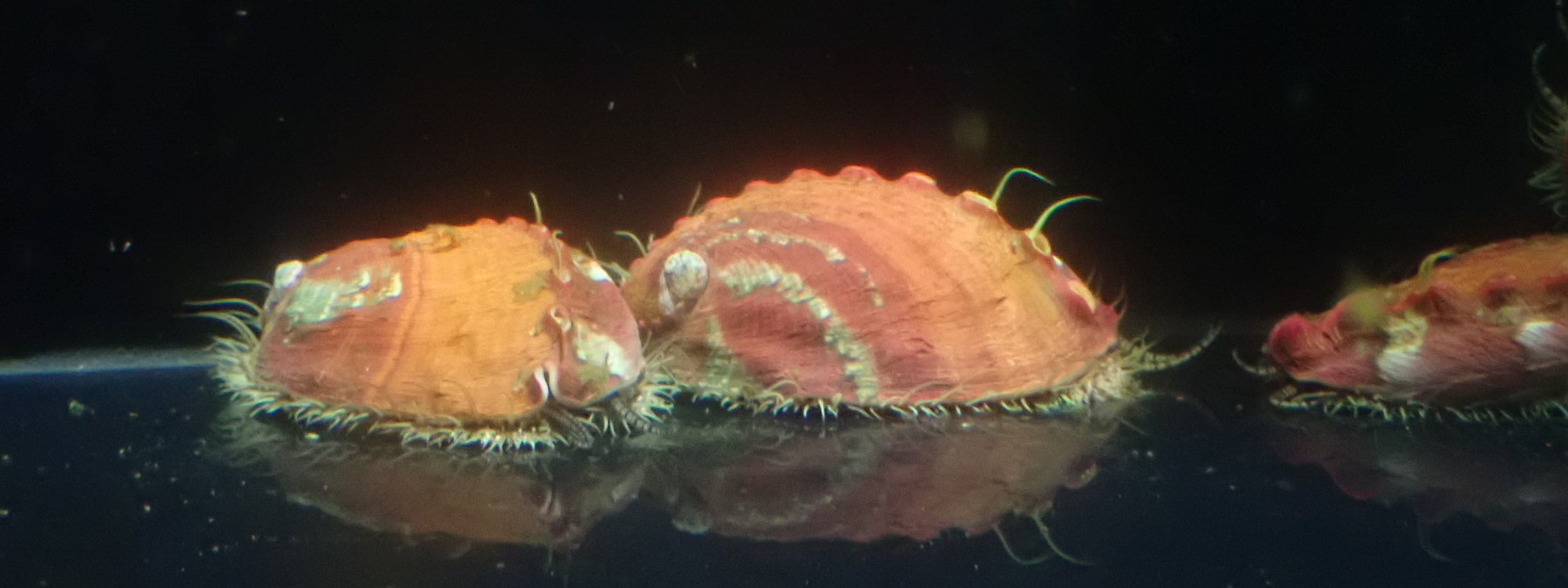
Restoration reaches across species and regions: (top) a blue mussel bed, and
(bottom) juvenile pinto abalone raised for release.
Session
Descriptions
S01: Indigenous-led Contemporary Restoration
Indigenous communities are leading shellfish restoration efforts that address ecological degradation and revitalize cultural practices. This session highlights Indigenous-led projects that integrate cultural stewardship, collaborative research, and co-governance frameworks.
S02: Restoring Ancestral Shellfish Mariculture
Indigenous Nations are reviving ancestral mariculture systems to increase food sovereignty and biological diversity. This session showcases initiatives braiding community knowledge and professional research to steward place-based cultural ecosystems such as clam and sea gardens.
S03: Hatchery Innovations, Upscaling, & Industry
Advances in hatchery and husbandry techniques that improve shellfish production, yield, and resilience. Presentations explore production analytics, hatchery network development, and innovations in logistics and implementation.
S04: Restorative Aquaculture
Farming practices that deliver measurable ecosystem benefits: water filtration, habitat creation, carbon sequestration, and nutrient remediation. This session bridges commercial aquaculture and ecological restoration.
S05: Genetics, Disease, & Biosecurity
The intersection of population genetics, disease dynamics, and biosecurity risks in shellfish restoration. Speakers address genetic variation in resilience, selective breeding, and practical biosecurity measures.
S06: Using Historical and Geohistorical Data to Inform Restoration Practices
This session explores how diverse records of the past (including time-averaged shell deposits, middens, and archival documents) can inform the restoration, management, and conservation of shellfish resources. Contributions will highlight how long-term baselines derived from these sources provide critical context for understanding past population and habitat conditions and changes over time. By integrating these insights with modern monitoring records, the session emphasizes data-driven strategies for improving the long-term success of shellfish restoration and habitat management.
S07: Urban Shellfish Restoration
Urban shellfish restoration and the role of interdisciplinary practitioners in restoring urban coastal ecosystems. Multi-sector collaborations and creative approaches to working in urban waters.
Session
Descriptions
continued
S08: Restoration of Other Molluscs & Invertebrates
Technologies for restoration of species other than oysters and clams, including other bivalves, invertebrates, crustaceans, and echinoderms. Creating habitat and outstocking strategies.
S09: Lessons Learned from Ostrea Communities of Practice
Regional communities of practice supporting recovery of native flat oysters (Ostrea spp.). Experts highlight how regional perspectives and collaboration support oyster recovery across continents.
S10: Resilience Building, Connectivity, & Seascape Approaches
Research and restoration strategies that connect habitat patches into durable, self-sustaining metapopulations, including larval connectivity modeling, seascape-scale site selection, and approaches for building resilience.
S11: Outreach, Creative Communications, & Storytelling
Real-world examples of storytelling and outreach that have helped spark meaningful community connection to shellfish restoration. The first half focuses on inspiration; the second half is hands-on storyboard development.
S12: Shell Recycling
Shell recycling as the cornerstone of shellfish reef restoration. Collection, processing, curing, storage, and deployment at scale, including biosecurity considerations, community involvement, and regulatory frameworks.
S13: Approaches to Substrate Supplementation
Provision of suitable substrate for restoring dense assemblages of bivalve molluscs. Alternative settlement substrates used to garner ecosystem services including habitat provisioning, water quality improvement, and nature-based shoreline protection.
S14: Freshwater Mussel Restoration
Conservation, propagation, and reintroduction of freshwater mussels, among the most imperiled groups of organisms in North America, with an emphasis on partnerships across Tribes, agencies, and community organizations.
S15: Ostrea lurida Restoration Efforts
A focused, lightning-talk session on Olympia oyster (Ostrea lurida) restoration.
Oral & Poster Presentation Abstracts
All 149 abstracts are online rather than in this booklet, which keeps it to 20 printed pages: shellfish-society.org/documents/icsr2026-abstracts.html
Program updates after print: shellfish-society.org/icsr2026/full-program.html

Venue Maps
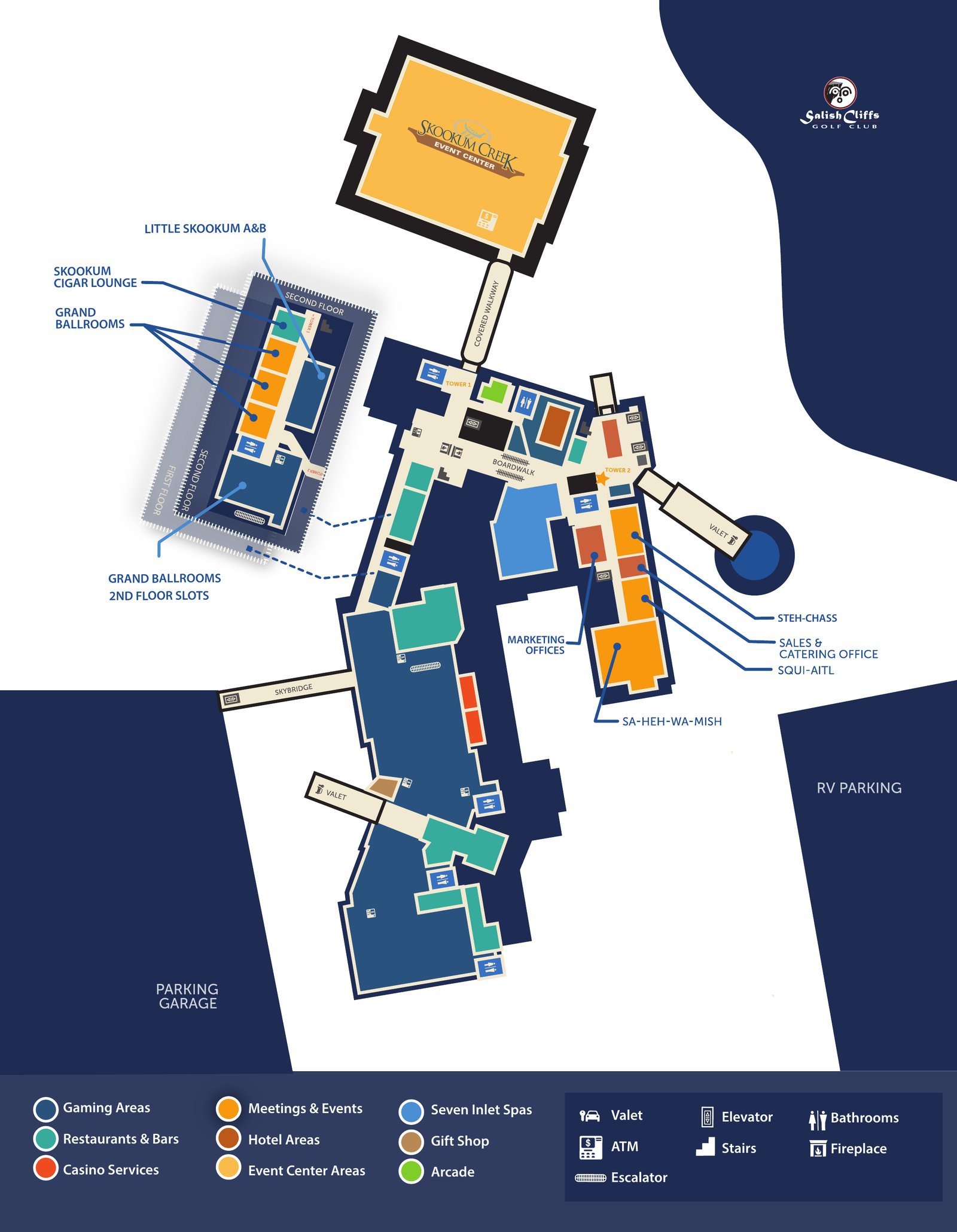
Property Map (Interior)
Sessions run in the Skookum Creek Event Center.
Room 1 is SA-HEH-WA-MISH, Room 2 is SQUI-AITL, and Room 3 is STEH-CHASS.
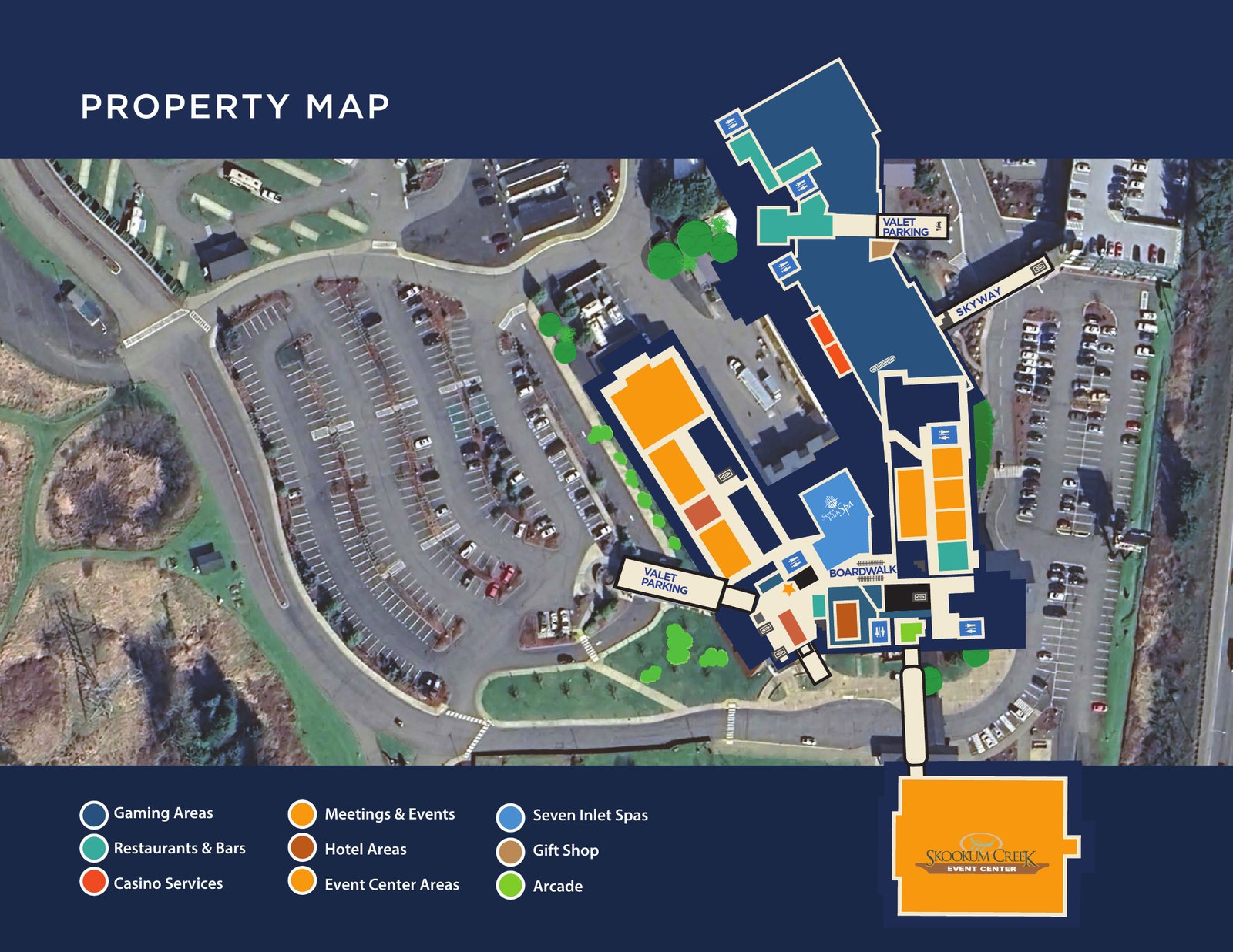
Property Map (Exterior)
Little Creek Casino Resort
91 WA-108, Shelton, WA 98584
littlecreek.com | (360) 427-7711
Photographs from ICSR 2024 by Trey Cooper; earlier conference photographs from the ISRS archive.
Willapa Bay photograph by Bob Williams, NOAA Fisheries Collection.
Squaxin Island Museum photograph by the Squaxin Island Tribe, CC BY-SA 3.0.
Blue mussel bed by Olivier Dugornay, Ifremer, CC BY 4.0. Pinto abalone by Bloodshot20, CC BY-SA 4.0.
Printed on 20% recycled paper by Nisqually Post & Print,
owned by the Nisqually Tribe’s Medicine Creek Enterprise Corporation.
© 2026 International Shellfish Restoration Society | shellfish-society.org
Tax ID (EIN): 39-2829151